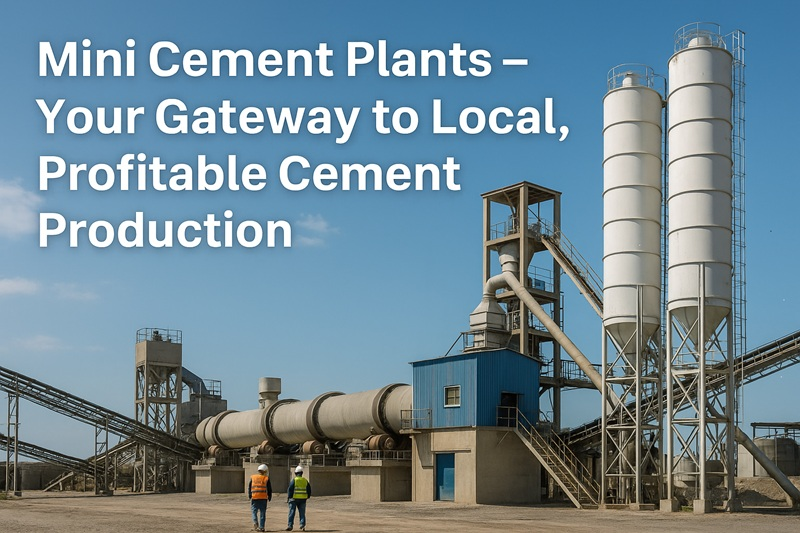
Why Running a Mini Cement Plant Might Be a Smart Move
When people think of cement manufacturing, they usually picture massive factories with towering silos and non-stop production. While those large plants dominate the market, there’s a growing trend toward mini cement plants—and for good reason.
Whether you’re a business owner exploring new opportunities or looking to supply cement to a local market, mini plants can offer a smart, scalable, and surprisingly efficient solution.
Here are some of the key advantages:
1. Lower Investment, Lower Risk
One of the biggest barriers to entering the cement industry is the cost. Mini cement plants significantly reduce that hurdle. You don’t need hundreds of millions to get started—smaller plants require less capital, making them perfect for small and medium-sized investors.
2. Set Up Where It Matters Most
A mini plant can be built close to where raw materials are sourced or where the cement will be used. This means you can cut down on transportation costs and serve local markets more efficiently.
3. Faster to Build and Launch
Unlike large-scale plants that can take years to become operational, a mini cement plant can often be set up and running in months, not years. This means you can get to market quickly and start generating returns faster.
4. Great for Local and Regional Demand
Mini plants are ideal for serving specific regions—especially in rural or remote areas where transporting cement over long distances is expensive or unreliable. Being local gives you a competitive edge.