Modern infrastructure and construction require cement. The yearly output is already surpassing 4.3 billion metric tons, and the projected growth is above 5% worldwide.
If you’re exploring a cement factory setup, you’re stepping into a market worth over 340 billion dollars, fueled by projects in Asia, the Middle East, and Africa. China produces more than half of the total global production, but India isn’t far behind, and it is expected to reach nearly 400 million metric tons soon.
A steady supply of this building material accounts for the global cement market's growth. Cement is an essential commodity for roads, skyscrapers, and residential complexes. When you secure the right site, machinery, and raw materials, you create a linchpin for countless construction undertakings in urban and rural landscapes alike.
Below, we’ll explore the main challenges in cement factory setup along with workable strategies. A combination of thoughtful planning and updated technology helps newcomers develop a stable platform for success in this high-stakes market.
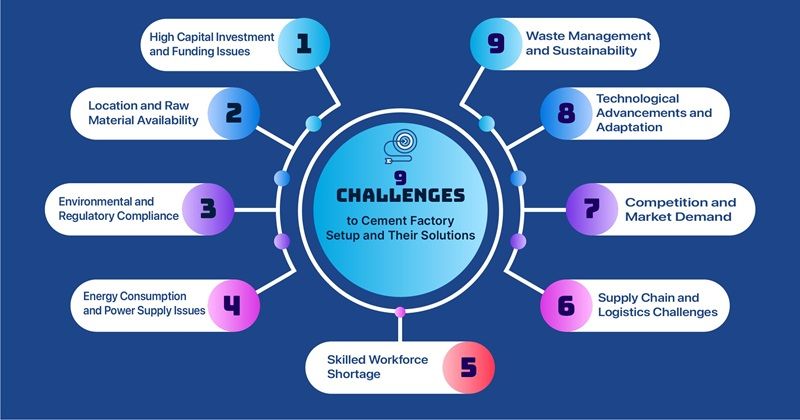
9 Challenges to Cement Factory Setup and Their Solutions
A quick overview for anyone eyeing a cement plant business plan reveals multiple hurdles, though experienced stakeholders often find methods to address them.
Below are nine major issues frequently seen, along with possible solutions.
High Capital Investment and Funding Issues
Land acquisition, heavy-duty machinery, and construction of core infrastructure demand significant outlays.
Below are major areas where the funding and investment challenge press your determination to start a cement manufacturing business.
Huge initial investment for land, machinery, and infrastructure
Large tracts of land near quarries, plus capital-intensive equipment, can stretch resources. Without a reliable financial plan, many projects stall.
Difficulty securing loans or financial backing
Investors may seek collateral, leading to complex negotiations and interest obligations. Traditional banks sometimes decline support if they doubt profitability.
Long payback period on investment
Funds tied up for several years limit immediate returns and require patience from all stakeholders.
Solutions
Explore multiple financing options (banks, investors, government incentives)
Different avenues include private equity, joint ventures, and grants from regional agencies that encourage industrial growth.
Conduct a detailed feasibility study to attract funding
Hard data about the cement manufacturing process and projected returns often draw more favorable credit terms. Speaking to someone who works in a cement manufacturing plant can offer insights into early-stage planning.
Partner with experienced stakeholders for joint ventures
Long-time professionals with strong track records enhance credibility in front of financial institutions, which can lower funding barriers.
Location and Raw Material Availability
Long distances between quarries and processing sites boost the cost of raw materials for cement production and create bottlenecks. Some regions impose strict regulations on how cement is made in a factory or face local disputes, making land acquisition grueling. Others require time-consuming environmental assessments.
Finding a suitable location close to raw materials
Proximity to raw materials like limestone, clay, and gypsum can cut transport expenses and ensure faster delivery of essential minerals. A poor location can lead to endless logistic struggles.
Land acquisition issues and environmental regulations
Traditional farmland or ecologically sensitive areas might cause local opposition. Government permits may be slow, creating drifting deadlines.
Logistics challenges in transporting raw materials
Infrastructure problems, such as poor roads, raise concerns about consistent supplies arriving at the plant.
Solutions
Conduct geological surveys to identify resource-rich areas
Run extensive ground tests to lower the risk of abrupt depletion or poor quality of raw materials.
Secure long-term agreements with raw material suppliers
Make multi-year contracts that help keep prices steady and reduce the effect of market swings.
Optimize transportation strategies to reduce costs
Rail networks or waterways lower expenses. Details on raw material hauling are sometimes shared by providers of the best cement plant solutions who can recommend based on the experiences of other clients they serve.
Environmental and Regulatory Compliance
If you want to invest in a plant, one concern could be complying with local laws regarding emissions, dust control, and disposal of industrial waste. Some residents also raise concerns about the environmental impact of cement factories, fearing air pollution or land degradation.
Strict environmental laws
There are laws regarding emissions, waste disposal, and land use in unplanned factory layouts. Failure to comply can result in major fines and shutdown threats.
Lengthy approval processes
There are processes for obtaining permits and licenses to set up a cement manufacturing plant. So, check twice, as permit boards sometimes have multiple layers of review that drag on.
Resistance from local communities
The local communities around the cement manufacturing plant may raise environmental concerns. Opposition groups might also push authorities to revoke or delay licenses, causing financial strain.
Solutions
Invest in eco-friendly technologies
Consider dust collectors, low-emission kilns, and advanced systems designed to control harmful emissions. These technologies help meet sustainability standards while enhancing cement manufacturing efficiency with modern equipment as you leverage top features for cement manufacturing equipment with ease.
Work closely with regulatory bodies for smooth approvals
Collaborative efforts shorten the paperwork timeline, especially if compliance steps are transparent.
Engage with local communities to build trust and support
Positive relationships reduce conflicts. People are more open to projects that address valid health and safety concerns.
Energy Consumption and Power Supply Issues
Large power requirements are familiar to anyone working with cement production challenges. Grinding raw materials, running kilns, and maintaining operational flows can push energy bills to extreme levels.
Cement production is energy-intensive
Entering into cement production means fulfilling the demand of high power consumption because multiple stages demand heavy electricity usage, which strains local grids and leads to rising tariffs.
Unreliable electricity supply
Frequent blackouts can increase operational costs, as the demand for backup systems raises the overall cost of setting up a cement plant.
Dependence on fossil fuels
There are high levels of sustainability concerns, as fossil-based fuels can increase carbon footprints, requiring advanced emission-control measures.
Solutions
Here’s how you can overcome the challenges around power energy consumption and power supply.
Implement energy-efficient equipment and alternative energy sources
Adopt new sources of energy like solar and wind to reduce carbon intensity and operational spending. Modern designs often include investing in energy efficiency in cement plants as a key strategy.
Establish captive power plants
To guarantee uninterrupted operations, you’d need self-generated power that preserves production levels and limits exposure to grid failures.
Optimize kiln operations
One way to overcome power and consumption issues is to use waste heat recovery systems. Here, heat-recapture lowers fuel usage, offering better margins and lower environmental impact.
Skilled Workforce Shortage
Many wonder how to start a cement factory when there is limited local talent trained in kiln operation challenges, plant management, and the overall cement manufacturing process. And, even after hiring, retention becomes difficult if wages aren’t competitive or advancement opportunities are lacking.
Shortage of trained professionals
There is a shortage of trained and certified workers in cement manufacturing and plant operations. This shortage forces companies to hire specialists from other areas, increasing labor expenses.
High labor costs and worker retention challenges
Seasoned operators often switch jobs for slightly better pay or benefits, and therefore, you’ll always remain in a conundrum around the right staff on the floor.
Need for continuous training and skill upgrades
The existing staff needs to be informed, as machinery changes over time, and they must keep pace with new methods.
Solutions
Here’s how you can overcome the challenges of keeping a skilled workforce at your cement manufacturing plant.
Partner with technical institutes
Let these institutes run skill development programs for your team. Such collaborations reduce training burdens and groom fresh graduates for specialized roles.
Offer competitive salaries
Good pay and career growth opportunities keep employees motivated to stay longer, lowering turnover and recruitment costs.
Implement on-site training programs
Provide hands-on instruction that builds confidence and aligns workers with standardized procedures, especially for new employees. For instance, training them about the types of cement and processes for manufacturing each may be a part of such training to expand their knowledge.
Supply Chain and Logistics Challenges
Next are the challenges of the cement factory regarding the shipping of raw materials and finished bags. The volumes involved demand robust transport networks, but many regions have poor infrastructure. Bad roads, unstable fuel prices, and limited bulk carriage options complicate schedules.
High transportation costs
Be it for raw materials or finished cement, movement from quarries to factories and then onward to construction hubs involves multiple legs of freight.
Poor road infrastructure
If your raw materials and product pass through rural areas, which often have prime limestone deposits, delays and damages from unpaved routes will occur.
Limited bulk transportation options
A shortage of rail wagons or ships can stall volumes and raise expenses in the longer run.
Solutions
Optimize supply chain
Focus on strategic warehousing and distribution centers because close-to-market storage sites shrink travel distances and speed up delivery.
Partner with reliable logistics providers
Firms with proven records help maintain consistent schedules. Reliable providers know of the top logistics challenges in the cement industry to help you overcome common pitfalls in moving clinker and finished product.
Explore railway or waterway
For bulk shipments and loading methods, choosing railway and waterway often cut costs, especially for large-scale deliveries.
Competition and Market Demand
Market demand for cement can fluctuate based on economic cycles, making it challenging to forecast returns accurately. Price wars erupt if multiple factories vie for the same customer base, eroding profitability.
Stiff competition
Established cement manufacturers already have distribution channels and brand recognition.
Fluctuations in cement demand
The global-level cement demand affects profitability because economic slowdowns or reduced infrastructure budgets can drop sales volumes unexpectedly.
Difficulty in brand positioning
For a newcomer, market penetration is a challenge since you’ll need to convince customers to switch from familiar products.
Solutions
Focus on product differentiation (quality, pricing, packaging)
Unique aspects stand out in a crowded market, especially if product grades cater to specific client needs. You need to highlight the top benefits of the cement plant with a focus on how design improvement can attract buyers.
Develop strong marketing and distribution strategies
Build your cement plant business that covers promotions, dealer networks, and consistent supply to have a strong foothold in the market.
Offer customized solutions
Provide construction companies and large projects with specialized mixes or tailored logistics to gain traction.
Technological Advancements and Adaptation
Machinery updates and cement plant automation bring huge benefits but also demand capital outlays and acceptance from the workforce. Old equipment can break down often, reducing productivity and raising repair bills.
Keeping up with advancements
In cement manufacturing technology, regular leaps mean older plants risk falling behind, especially regarding product quality and cost control.
High costs of upgrading existing machinery
Retrofitting older lines can be expensive, requiring new control systems and specialized technicians.
Resistance to digital transformation and automation
Some employees see automation as a threat, raising morale issues.
Solutions
Invest in modern, automated production equipment
Machinery that tracks performance in real time can spot problems before they escalate. Consult the best cement plant manufacturer who can help you source advanced equipment.
Implement digital tools
Tools such as IoT, AI, and real-time monitoring systems with dashboard analytics help operators anticipate breakdowns and schedule maintenance.
Train employees to adapt to new technologies
Workshops and mentorship sessions can shift attitudes, preparing staff for modern manufacturing.
Waste Management and Sustainability
Efforts to maintain a clean environment continue to grow, so any new cement factory setup must address industrial waste and carbon footprints. Sustainable cement production pushes companies to adopt methods like carbon capture and alternative fuels.
Managing waste material
Uncontrolled disposal of waste material like kiln dust and emissions, coupled with poor emission systems, can invite legal penalties and public backlash.
Compliance with strict environmental sustainability regulations
Authorities demand lowered CO₂ outputs and water usage, which can raise operational costs.
Increasing demand for eco-friendly cement production
Buyers now seek green labels, so failing to address these concerns can harm market share.
Solutions
Implement waste recycling programs within the plant
Reusing kiln dust or repurposing materials fosters a circular approach. For instance, a successful lime manufacturing business relies on recycling efforts for lime byproducts.
Use alternative raw materials
Turn to eco-friendly production processes by substituting fly ash or slag to reduce reliance on virgin resources. It lowers the negative environmental impact of cement factories.
Invest in carbon capture technologies
Bring in emission control systems and carbon capture technologies to lower emissions. You don’t only comply with rules with this but also appeal to environmentally conscious customers.
Conclusion
Many aspects of setting up a cement factory present hurdles that may overwhelm the unprepared. Therefore, careful site selection, thorough engineering studies, and consistent financing options lay a solid foundation for future stability.
Energy efficiency in cement plants, advanced controls, and responsible sourcing all add resilience against uncertainties. As a cement plant owner, you’d prioritize technology upgrades and continuous workforce training to boost their competitiveness.