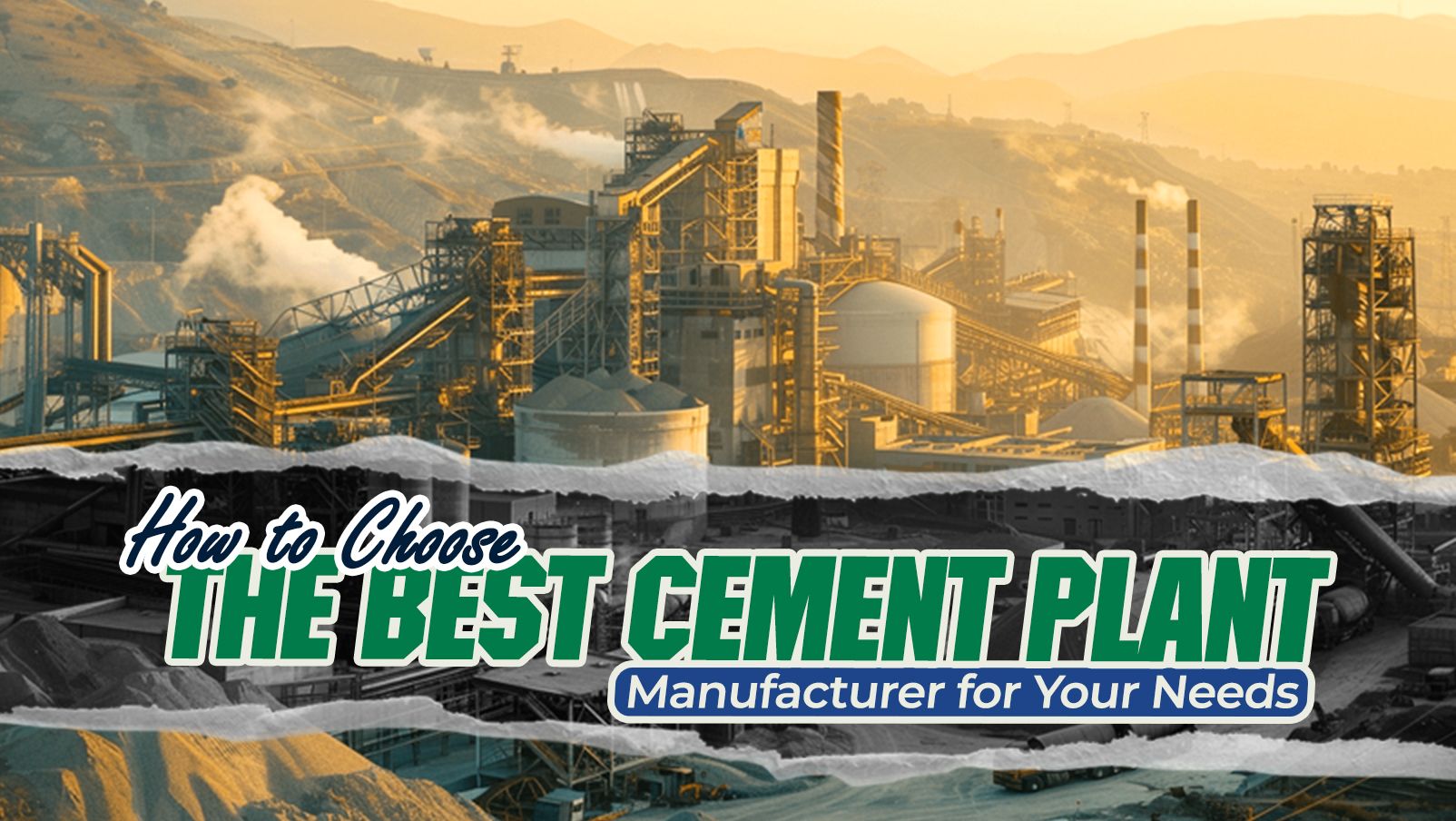
Choosing the right cement plant manufacturer is important. They play a huge role for the success of your project. When you start searching for a cement plant manufacturing company, first think of what your project needs. Do you need equipment that saves energy? Or maybe something affordable? You might want the latest technology to keep things running smoothly.
Remember, a reputable manufacturer will give you quality machines with personalized solutions to match your goals. But with so many manufacturers available in the market, it will be really difficult to find a manufacturer who will offer reliability, efficiency, and innovation.
To make your search easy, continue reading our article. Here, we will discuss the important factors to consider when choosing the cement plant manufacturer for your project. By the end of the article, you will surely have the clear understanding to make a wise decision that drives the success of your project.
Understanding Your Requirements
Before choosing the right cement plant and machinery manufacturer, you must thoroughly analyze specific aspects of your project. This includes:
Project Scale
The size and scope of your project directly affect the type of cement plant you require.
- Small-Scale Operations: If you are targeting a local or niche market, go for a compact plant designed for limited output. It will cost less and use less space and infrastructure.
- Large-Scale Operations: For mass production or export purposes, choose a large cement plant with high-capacity equipment. These plants require significant investment but can handle high demand and meet large-scale requirements efficiently.
- Customization Needs: Consider if your project requires specialized features or modular designs for adaptability and scalability as your business grows.
Production Capacity
Production capacity is very important in determining the operational efficiency and profitability of your cement plant. Here are the critical factors to consider:
- Daily Output Requirements:
Assess how much cement your plants need to produce every day. Most manufacturers offer equipment tailored to specific output ranges, such as:
- 100 tons per day
- 500 tons per day
- 1000 tons per day or more
Evaluate both peak production needs during high-demand periods and average production needs during normal operations.
Hence, Choose a manufacturer that offers flexible solutions to adjust production capacity based on market demand. This way, you can ensure your plant meets operational goals and market demands effectively.
Technology and Automation
Technology and automation help improve efficiency and lower costs. Hence look for manufacturers that incorporates:
- Advanced Equipment: Automated systems, robotics, AI, energy-efficient solutions, and control systems to optimize operations.
- Innovative Features: IoT-enabled systems for real-time tracking, predictive maintenance, and reduced downtime.
- Sustainability: Eco-friendly practices would include low emission kilns, energy recovery system, and integrating renewable energy, ensuring that every operation is regulatory compliant.
- R&D Investment: An emphasis on the research and development to stay in front of market trends and respond to new technologies.
Budget Considerations
When choosing a reliable cement plant and machinery manufacturer, budget is a key factor.
First, calculate the upfront costs. This includes equipment, transportation, and installation.
- Ask different manufacturers for quotes to compare prices.Then, think about ongoing costs. These include energy, raw materials, labor, and maintenance.
- Energy-efficient equipment will cost more to begin with, but it pays for itself later on. For example, energy-efficient plants will reduce energy use by 30-40% directly lowering your bottom line.
Also, consider the Return On Investment (Roi). Balance your initial costs with expected efficiency and profit.
- If you go with the right equipment then you can recover your initial investment in 3-5 years. After that, your plant can start making a profit while keeping costs low.
Some manufacturers offer financing plans or leasing options. These can help if your budget is tight.
Don’t forget to count hidden costs, such as licensing, training, and software updates.
Key Manufacturer Factors to Ensure Long-Term Success
The best cement plant equipment manufacturer is not just about price, it’s about ensuring long-term success. Here are the tips for choosing a Reliable Cement Plant manufacturer:
Manufacturer’s Knowledge and Proficiency
The manufacturer’s technical knowledge and industry experience are essential to meet your unique project requirements:
- Ensure they have a deep understanding of cement plant machinery and processes from raw material handling to the final product
- Check whether the manufacturer has worked with businesses in similar sectors or production scales.
- Check if they offer consultation services for plant design and technology selection to optimize efficiency.
Completed Projects/Portfolio
A strong portfolio will give you a clear picture of the experience and the ability of cement plant manufacturers. Here's what to look for:
Experience
A good portfolio will tell you a lot about the manufacturer’s expertise like:
- Type of project
- Timeline management
- Overcome challenges
- Successful Outcomes
Make sure to check if they have previously handled similar projects like yours. Because, previous experience in projects similar to yours boosts the chances of success.
Size and Complexity of past projects
Check if they have managed large, complex projects with advanced technology. If they have experience only with smaller projects, they may not be suitable for more demanding or high-budget work.
By considering these points, you can determine confidently that the manufacturer holds the right competencies to help you run your cement plant.
Evaluating the Manufacturer’s Reputation
When selecting a cement plant manufacturer, it's really important to ensure you choose a reliable partner. Here's how to assess their credibility:
Customer Reviews and Testimonials
Look for feedback on independent sites like industry forums or review websites. You can even talk to past or current clients to get an idea of manufacture performance. As per a study, 81% of customers trust online reviews as much as personal recommendations. Hence this is an important step to know the product quality and customer services.
Certifications and Accreditations
A reputable manufacturer will often have certifications that show they follow industry standards and practices. Some key certifications to look for are:
- ISO 9001: Quality Management
- ISO 14001: Environmental Management
- OHSAS 18001: Occupational Health & Safety
- CE Marking: EU Safety and Performance Standards
- LEED/Green Building: Commitment to sustainability
These certifications give validation that the manufacturer is serious about following high standards and continues to improve the processes.
After-Sales Support
After-sales support is also essential for cement plant manufacturing to ensure a seamless process when selecting a cement plant manufacturer. What to look for:
- Instant supply of spares to avoid unnecessary idle hours worth between $10,000 to &50,000 an hour.
- Comprehensive Maintenance Packages, ensuring your plant stays efficient.
- On Site And Remote Technical Support for smooth operation.
- Training programs for operators and maintenance staff to make sure the equipment’s efficiency and lifespan.
- Long-Term Partnerships to run your plant efficiently and up-to-date.
Financial Stability
The financial stability of a manufacturer is essential for reliable long-term partnerships. A financially stable manufacturer will:
- Fulfill orders on time
- Maintain high-quality standards
- Invest in innovative technology and equipment
- Provide transparent pricing
This ensures consistent performance, cutting-edge solutions, and uninterrupted support.
Key factors to consider before signing the contract
Once you find a manufacturer that fits your project, here is the review in negotiations:
- Pricing Transparency: Seek clear and detailed pricing and if there is a discount on bulk orders.
- Payment Terms: Discuss payment schedules that are convenient for you, be it upfront, in installments, or even after delivery.
- Lead Time: Ensure that the delivery time is in line with your project timelines. A lot of problems arise due to delays, so confirm when you can expect everything.
- Logistics and Delivery: Talk about shipping costs and who is responsible for transport, especially if your project is in a remote area.
- Penalties for non-compliance: State the penalties if they are not meeting the deadlines or the quality standards.
After checking out all the above points, reassure the contract has all the below important details before sealing the deal:
- Scope of Work: Outline what is to be expected, in terms of cement quality and production capacity with the technology adopted.
- Timelines and Milestones: Break the project into phases, with clear deadlines for each—like delivery, installation, and final commissioning.
- Payment Schedule: Make sure the payment amounts and dates are laid out clearly, and specify what services you’ll get at each phase.
- Performance Guarantees: The contract should include guarantees on things like cement quality and production standards, so you can trust they’ll meet expectations.
- Dispute Resolution: Agree on a way to resolve any issues that might come up, whether through arbitration or legal action.
Once you have agreed on everything, you can sign the contract and move forward with your project confidently.
Conclusion
Choosing the right cement plant manufacturer is highly crucial for running the operation smoothly and efficiently. On evaluating these above factors, you can find the right partner providing best-in-class equipment in support of long-term growth in cement operations and efficient profitability. Whether exploring Types of Cement or leading in the Global Cement Market Growth, the right choice ensures long-term success, profitability, and adherence to industry trends.