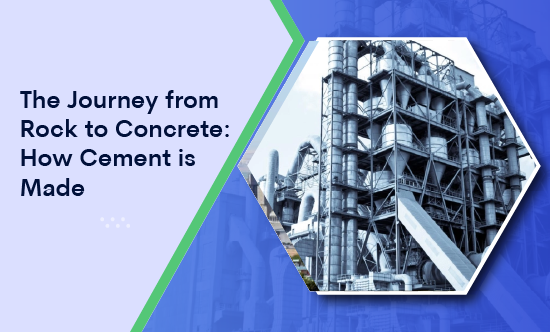
The global cement output stands at around 4.1 billion metric tons annually, marking a global cement market growth. This enormous production is a result of the worldwide infrastructure—bridges, highways, and skyscrapers rely on cement’s versatility.

Demand continues to climb because of urban development, large-scale construction, and the fast-growing requirements of modern societies.
But, there are hurdles to productivity in a cement plant, such as high energy consumption, elevated CO₂ emissions, and complex raw material logistics. What you know is how cement is made in the factory. But what about the productivity challenges that affect both profitability and sustainability?
So, it is necessary to address these concerns by focusing on advanced technology in cement plants to streamline production, lower emissions, and reduce energy costs. Automated systems and predictive analytics drive better decision-making, while digital tools maximize equipment uptime.
In this guide, we’ll walk you through those challenges and provide an in-depth understanding of how to make it work efficiently.
Digitalization and Automation in Cement Plants
Digitalization in cement industry practices transforms how plants operate, moving away from manual interventions toward data-driven precision. Implementing process automation and real-time analytics enables better energy efficiency, enhances safety, and increases consistency.
Advanced Process Control Systems
Implementing these specialized control mechanisms significantly refines raw mix composition and clinker formation.
By relying on algorithm-driven adjustments to major parameters, process control systems for cement plants deliver stable operating conditions with minimal manual intervention.
- Leverage model predictive control (MPC)
- Integrate real-time feedback loops
- Employ advanced technology in cement plants to automate raw material blending
Predictive Maintenance and Condition Monitoring
Collecting performance data from IoT-enabled sensors helps forecast issues well before they cause breakdowns. This proactive method curtails unplanned stops and is especially valuable in scenarios where even brief disruptions can be costly.
- Conduct vibration analysis
- Use thermal imaging
- Perform schedule repairs
Digital Twin Technology
Building virtual replicas of physical assets such as kilns and mills enables the simulation of process changes without halting operations. Such sophisticated modeling is a prime example of advanced technology in cement plants, minimizing risky trial-and-error approaches.
- Use heat-transfer modeling
- Simulate varied fuel mixes or raw feed compositions
- Calibrate the twin with live plant data
Energy Management Systems
Centralized power consumption monitoring across each production phase leads to substantial savings. Such initiatives also advance energy efficiency in cement plants, reducing both costs and environmental impact.
- Track real-time electricity usage to pinpoint inefficiencies in pumping, grinding, or heating.
- Automate lighting and ventilation based on occupancy or process demand.
- Incorporate best practices aligned with recent trends in cement industry sustainability goals.
Real-Time Data Analytics
Gathering continuous data on critical variables like feed rates, temperature distributions, and fuel consumption fuels swift decision-making. This wealth of information fortifies cement plant optimization efforts and prevents production setbacks.
- Install sensors at multiple checkpoints
- Apply machine learning
- Generate alerts when operations stray
Automated Material Handling
Transitioning from manual transfer systems to robotics and conveyors eases workforce demands and boosts throughput. Automation in cement production also enhances safety standards and streamlines material flow.
- Use conveyor networks
- Integrate robotic arms in challenging environments
- Introduce weight sensors
Remote Monitoring and Control
Supervising plant activities from off-site locations allows swift adjustments and fewer personnel on the ground. This capability represents a leap in digitalization in cement industry practices, ensuring uninterrupted workflows.
- Use video feeds or thermal imaging
- Collaborate with VSK cement plant manufacturers or rotary kiln cement plant manufacturers for integrated solutions.
- Perform remote diagnostics and software updates for physical troubleshooting.
Energy Efficiency Enhancements
Did you know that energy efficiency in cement plants directly impacts cost structures and sustainability goals?
Rising energy costs and stricter environmental standards compel producers to rethink traditional methods. Tapping into advanced technology in cement plants can lead to better resource allocation, improved production stability, and more sustainable business practices.
Waste Heat Recovery Systems
Waste heat recovery capitalizes on kiln exhaust gases that often reach over 300°C. Instead of releasing this heat into the atmosphere, specialized equipment captures it to generate electricity or preheat incoming materials.
- Steam generators or heat exchangers convert excess heat into power.
- Systems can cut purchased energy by up to 20%, according to the top benefits of cement plant.
- Integrating the recovered power with plant operations reduces dependence on external grids.
Alternative Fuels and Raw Materials
Diverse fuel sources—think biomass, waste tires, or industrial byproducts—lower fossil fuel reliance while shrinking carbon footprints.
Many producers also experiment with raw material substitutions inspired by successful lime manufacturing business models.
- Co-processing these fuels curbs landfill usage and associated emissions.
- Municipal waste and agricultural residues often have lower net CO₂ output than coal or oil.
- Adjusting feed composition can improve clinker quality while reducing resource extraction.
High-Efficiency Grinding Technologies
Grinding consumes a hefty portion of electricity in cement production. Transitioning to vertical roller mills or refined ball mills relieves some of that burden.
- Advanced separators focus on consistent product fineness, preventing over-grinding.
- Upgraded mill liners reduce friction and enable more efficient power usage.
- Aligning with top features for cement manufacturing equipment ensures stable output with minimal energy loss.
Sustainable Cement Production
Stringent environmental regulations and growing consumer awareness push you to adopt greener methods.
Whether part of a massive cement plant manufacturing company or a compact cement manufacturing plant just entering the market, eco-friendly initiatives help future-proof the business.
The below methods can help here.
Carbon Capture and Storage (CCS)
Carbon capture and storage systems address the industry’s CO₂ emission challenge head-on. Isolating carbon from flue gases and securing it underground or reusing it elsewhere are vital solutions for cutting greenhouse gases.
- Absorption towers separate CO₂ for compression and storage.
- Integration with existing plant layouts can be complex but offers substantial emission reductions.
- Aligns with the future of cement industry compliance standards and public expectations.
Blended Cements and Supplementary Cementitious Materials (SCMs)
Fly ash, slag, and other byproducts find new life when mixed with clinker, producing blended cements from the different types of cement. Lowering the clinker factor reduces CO₂ intensity per ton of finished product.
- Improves the durability and long-term strength of concrete.
- Decreases natural resource consumption, reinforcing circular economy ideals.
- Cuts production costs by shifting away from pure clinker reliance.
Electrification of Kilns
Electrifying kilns promises a near-total reduction of combustion-related emissions when powered by renewable energy.
Though still in early adoption, advanced technology in cement manufacturing increasingly entertains electric kilns for smaller batch operations or as pilot projects.
This will
- Replace coal or petroleum coke with cleaner electricity sources.
- Offer potential synergy with solar or wind farms for sustainable power.
- It gives you a glimpse into how the latest technology in cement industry processes might evolve over time.
Quality Control and Assurance
Maintaining consistent product standards benefits everyone builders rely on it for structural integrity, and plant owners count on it for brand reputation.
Skimping on quality control invites costly rework, unhappy customers, and potential safety risks. Focused investment in advanced technology in cement plants fosters reliability, consistency, and trust among end-users.
Real-Time Material Analysis
Equip your facility with X-ray fluorescence (XRF) scanners or analyzers for instantaneous readouts of chemical compositions.
- Pinpoints raw mix variations before they escalate into clinker defects.
- Minimizes guesswork and speeds up process decisions.
- Integrates with process control systems for cement plants to form a closed feedback loop.
Automated Sampling and Testing
Robotic samplers reduce human error by collecting specimens at regular intervals. Automated labs process these samples swiftly to verify adherence to predefined benchmarks.
- Lower variability in test results means greater confidence in the final product metrics.
- Rapid detection of off-spec batches prevents large-scale recalls or customer dissatisfaction.
- Simplify workforce allocation, freeing personnel for higher-level tasks.
Process Optimization Software
Software solutions collect and analyze plant data to highlight inefficiencies or potential improvements. This digital toolset frequently appears in solutions offered by VSK cement plant manufacturers or Rotary Kiln Cement Plant Manufacturers.
- Monitors throughput, fuel usage, and emission metrics.
- Suggests parameter tweaks—like adjusting kiln speed or raw mix ratios—to stabilize output.
- Enhances consistency while decreasing resource consumption.
Reliable quality standards make a compelling case for growth and the best cement plant solutions. An operation that marries advanced monitoring tools with skillful human oversight inevitably cultivates a reputation for excellence.
Case Studies of Technological Implementation
Companies worldwide embrace automation, predictive analytics, and other innovative ideas in cement industry upgrades to raise productivity and shrink ecological footprints. Most aim for stronger profitability while meeting stricter eco-regulations, showcasing how advanced technology in cement plants can deliver real results.
Digitalization Success Stories
Major producers such as CEMEX and Holcim employ real-time data analytics, letting centralized teams monitor multiple sites at once.
Automated alerts and remote process controls have slashed downtime, illustrating the impact of digitalization on cement industry operations.
Energy Efficiency Projects
LafargeHolcim has pursued extensive waste heat recovery efforts, substantially cutting energy bills. Some plants integrate solar or wind power as alternative energy sources. These strategies highlight energy efficiency in cement plants that prioritize continuous innovation.
Sustainability Initiatives
Heidelberg Materials invests in carbon capture pilots, electrified kiln research, and clinker substitution techniques. By championing sustainability projects, they exemplify best cement plant manufacturer practices that reduce the environmental burden while maintaining production targets.
Challenges and Considerations
When targeting higher productivity through advanced technology in cement plants, it’s easy to focus on the end goal and overlook the obstacles.
Integrating advanced technology in cement plants involves multiple complexities, wherein you can address a few key points for smoother transitions:
Investment and Cost Implications
- Substantial capital may be required to upgrade machinery, install sensors, or integrate new software.
- Return on investment often emerges over the long term, demanding patience and robust financial forecasting.
Integration with Existing Systems
- Retrofitting modern tools onto decades-old infrastructure can be tricky.
- Collaboration with specialized engineering teams ensures seamless interfacing between legacy equipment and new platforms.
Skill Development and Training
- Advanced systems require operators and technicians who grasp digital dashboards and analytics tools.
- Continuous training fosters confidence and reduces operational errors that might erode efficiency gains.
Future Trends in Cement Manufacturing
Today’s breakthroughs often set the stage for tomorrow’s victories. Fresh developments in AI, 3D printing, and carbon-negative formulations stand to reshape the future of cement industry practices.
Keeping an eye on top trends for the construction industry ensures agility in a fiercely competitive marketplace.
Artificial Intelligence and Machine Learning
In-depth machine learning models can predict variables like raw mix fluctuations, equipment stress, or upcoming maintenance needs. By incorporating these insights, the plant experiences fewer disruptions and steadier output.
- Automated anomaly detection accelerates decision-making and lowers waste.
- Real-time forecasting tools guide daily planning for everything from fuel management to logistics.
3D Printing with Cement
Printed concrete structures bypass traditional formwork, enabling faster project completion and imaginative architectural designs. Although still emerging, 3D printing extends the range of possibilities for automation in cement production.
- Reduces material waste by dispensing only what’s necessary.
- Speeds up construction timelines, especially for custom or complex shapes.
Development of Carbon-Negative Cements
Ongoing R&D targets formulations that capture or offset more CO₂ than they emit. Such cutting-edge chemistry could upend existing norms and drive a new wave of cement plant optimization focused on climate positivity.
Conclusion
Thriving in the cement sector requires innovative strategies, decisive action, and, above all, a clear focus on advanced technology in cement plants. From carbon capture projects to automated material handling, each initiative highlights a commitment to quality, efficiency, and environmental responsibility.
When seeking a partner to implement these solutions, consider NNT Cement a go-to resource. With comprehensive knowledge of cement manufacturing equipment, VSK technology, rotary kilns, and real-time data analytics, this dedicated provider helps businesses adopt the latest technology in cement industry practices.