Cement is a vital product for the construction industry. Without cement, construction isn't possible. You find it absolutely everywhere, from houses and roads to sky scrapers and bridges.
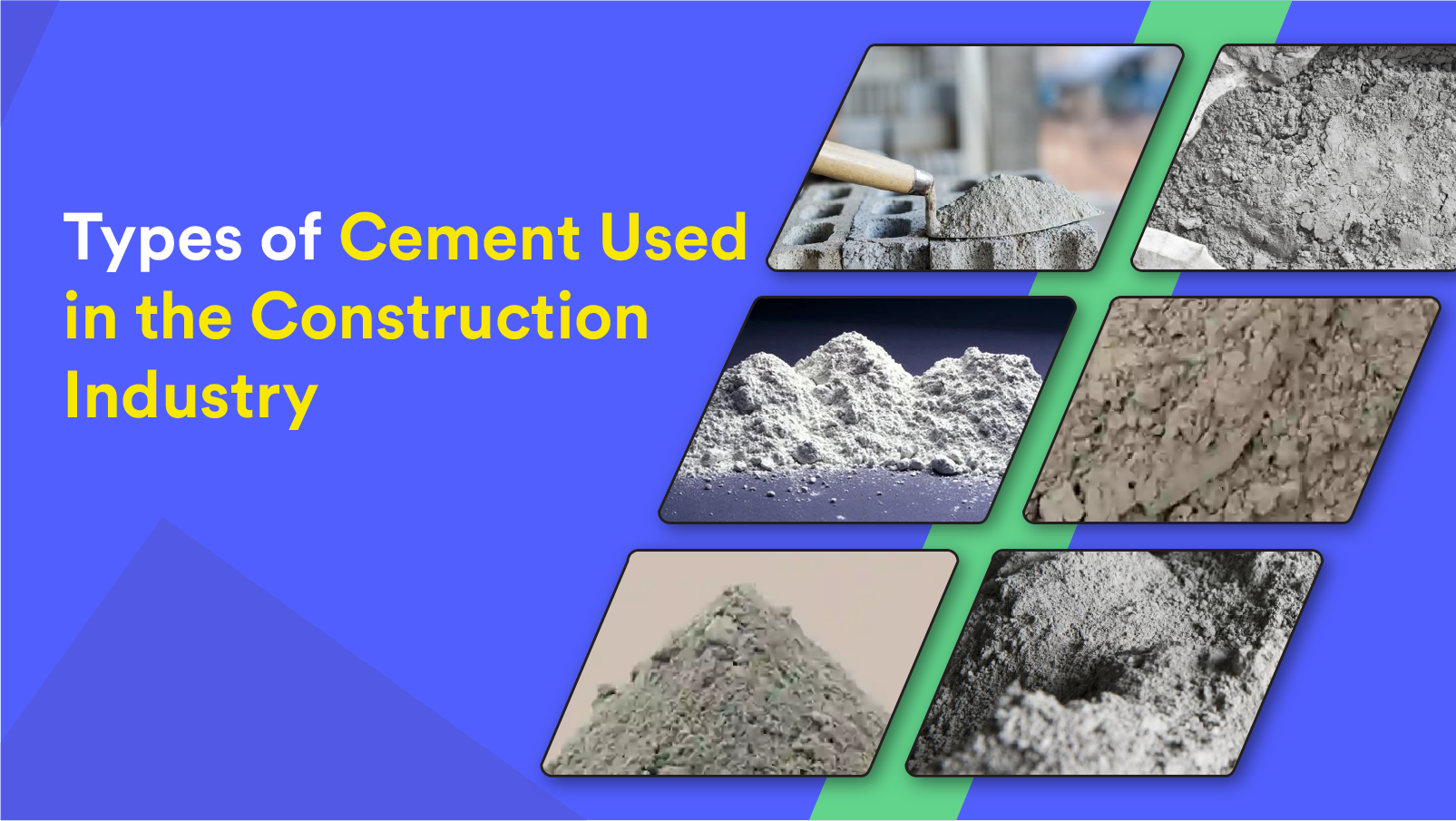
This cement is made by heating materials like clay, limestone, and silica, and it is made into fine powder. When you mix above powder with water and aggregates, it creates a paste that solidifies into a very robust structure. It makes bricks, stones, or aggregates bond together to form strong long-lasting structures.
But there isn't a single type of cement. Over time, as technology has advanced, there have been different types of cements developed that suit specific construction needs. Each one has unique features that give more accuracy as to how quickly it sets, how much strength it provides, or how well it could resist different environmental conditions.
Knowing about these types is very useful as the choice of cement can make a big difference in how your structure will perform and last. For instance, some cements are great for building roads that need to be ready quickly, while others are designed with the intent of withstanding chemical damage or extreme weather conditions.
In today's guide, we will discuss various types of different cements, features, and their applications. So, by the end of this article, you will be really clear about which type works best for your projects.
But before that, let's know about the statistics about cement production.
Global statistics growth of cement production
Cement production has recently gone up because the demand for construction and infrastructure is increasing over the years.
- In 1995, global cement production was 1.39 billion tons, which tripled to 4.1 billion tons by 2023. This growth shows just how much construction activities have expanded globally, especially in developing regions.
Now, let’s talk about who’s leading this production race.
- China is at the top, producing over 2.1 billion metric tons of cement in 2023-nearly half the global output.
- India comes in second, producing 400 million metric tons.
- Europe produces about 200 million tons; Turkey and Germany are the key players there.
- In North America, production is smaller, around 100 million tons, mainly led by the U.S.
Africa and the Middle East together add 300 million tons, and these areas are expected to grow even more as they continue developing.
But there’s a big downside to all this production.
- Cement manufacturing is energy-intensive. It requires temperatures above 1400°C. This process generates a lot of carbon dioxide (CO₂).
- In 2021, it generated 1.56 billion metric tons of CO₂, making it a key contributor to global emissions.
This is driving significant pressure on the cement plant manufacturing companies to adopt cleaner and greener production methods like using carbon capture technology and alternative materials.
Types of Cement Used in Construction Projects
1. Ordinary Portland Cement (OPC)
OPC is one of the most commonly used cements. It is known for its strength, durability, and versatility in construction.
It is produced by grinding Portland clinkers-made by burning limestone as well as other raw materials, mixed with a small proportion of gypsum. This system retards the setting time of cement and prevents it from early hardening.
OPC comes in three different grades:
- 33 Grade: Moderate strength
- 43 Grade: Higher strength
- 53 Grade: Strongest
Applications of OPC
- Concrete
- Mortar
- Plaster
- Buildings and Infrastructure
- Crack repairs
- Quick construction
Features of OPC
- High compressive strength
- Durable
- Fast setting time
- Cost-effective
- Crack Resistant
- Quick Curing
2. Portland Pozzolana Cement (PPC)
Portland Pozzolana Cement (PPC) is a type of blended cement made by grinding pozzolanic materials like fly ash, volcanic ash, or silica fumes with Portland cement. These pozzolanic materials, when mixed with lime and water, form compounds that have cementing properties, improving the strength and durability of the cement.
Applications
PPC is used in many types of construction projects, especially where enhanced durability and resistance to environmental stress are needed. Some of the main applications include:
- Dams and hydraulic structures.
- Marine structures like bridges and piers.
- Sewage treatment plants.
- Pre-stressed and post-tensioned concrete works.
- Masonry, plastering, and decorative structures.
- Large concrete foundations.
Features
- Fine Texture with 300 m²/kg surface area for strength and workability..
- Less Cracking
- Setting Time: Initial setting time is 30+ minutes; final setting time is up to 600 minutes,
- Stronger over time, reaching 33 MPa in 28 days.
- Low drying shrinkage (<0.15%), reducing cracks
- Durable and chemical resistant
- Cost-Effective and economical as it uses recycled materials like fly ash.
- Corrosion resistant
3. High-Strength Concrete (HSC) Cement
High-strength concrete is specifically engineered to resist higher loads and pressures than regular concrete. The product is made up of cement, water, aggregates, such as sand or gravel, and special additives like silica fume or fly ash, that help to build the strength and durability of the concrete.
Applications
HSC is commonly used in construction where high strength is required. Here are a few examples of its applications:
- Bridges
- Flyovers and Overpasses
- High-Rise Buildings
- Industrial and Commercial Buildings
Features
- Higher Strength
- Improved Durability
- Reduced Thickness and Weight
- Enhanced Stiffness
- Better Performance Under Stress
4. Rapid-Hardening Cement
Rapid-hardening cement gains strength much faster than regular cement (like OPC). For example, the strength that regular cement takes seven days to achieve can be reached in just three days with this one. That’s why it’s also known as High-Early Strength Portland Cement.
Applications
This cement is ideal for projects requiring quick results, such as:
- Formwork Projects
- Road Construction
- Precast Concrete
- Cold Weather– Generates heat, prevents concrete from freezing.
- Quick Repairs
Features
- Fast Strength: Achieves 7-day strength in just 3 days.
- Quick Setting: Sets in 30 minutes, hardens in 600 minutes.
- Heat Generation
- Durability: Resists sulphates with minimal shrinkage.
- Quick Curing
- Lightweight
5. Low-Heat Cement
Low Heat Cement is specially designed to generate minimal heat during hydration by reducing the percentage of tricalcium aluminate (C3A) and increasing C2S (Dicalcium Silicate).
Application
You’ll find low-heat cement being used in projects where controlling temperature and preventing cracks is crucial. For example:
- Dams
- Large Foundations
- Power Plants
- Chemical Factories
- Marine Structures
Features
- Less Heat; reduce thermal cracking.
- Easy to Use
- Maintains size and shape without unexpected expansion or shrinkage.
- Stronger Over Time
- Durable
- Compatible as it can mix with additives like fly ash or slag for better performance.
- Eco-Friendly
6. Sulphate-Resisting Cement
Sulphate-Resisting Cement withstand damage caused by sulphates. These sulphates are often found in mineralized water or certain types of soil, which can weaken regular concrete over time.
It contains a very low amount of a compound called tricalcium aluminate (less than 5%). This helps it resist sulphate attacks and keeps concrete strong and durable, even in tough conditions.
In short, Sulphate-Resisting Cement is like a shield for your concrete—it protects it from harsh conditions and ensures that your construction stays strong and reliable for years to come.
For best results, the concrete made with SRC must be dense, well-compacted, and properly cured
Application
SRC is perfect for projects where sulphate exposure is a concern. Some common uses include:
- Pile Foundations
- Basements
- Coastal Areas
- Sewage and Water Treatment Plants
- Sea Walls, Dams, and Reservoirs
- Petrochemical and Food Factories
Features
- Sulfate Resistance; prevents cracks and damage.
- Long-lasting strength.
- Corrosion Protection
- Low Heat; reduces cracking
- Prevents Swelling
7. Portland Slag Cement (PSC)?
Portland Slag Cement is a type of cement made by mixing below three main ingredients:
- Portland cement clinker: Main material in most types of cement.
- Granulated blast furnace slag: Recycled by-product from steelmaking that adds strength and durability.
- Gypsum: Regulates setting time.
The mixture of above products made a cement which is strong, durable as well as environmentally friendly.
Application
PSC is very versatile and can be used in many types of construction. For example:
- Large structures like Dams and foundations
- Marine structures like Pier or harbour
- Precast concrete products
- General construction
Features
- Strength
- Durability
- Workability
- Cost-effective as it uses recycled slag
- Eco-friendly
- Low heat of hydration
8. White Cement
White cement is a special type of cement that stands out because of its bright white colour. It is made using pure raw materials. Also, the manufacturing process is different from regular grey cement. In grey cement, there are higher amounts of substances like iron and chromium, but in white cement, those are kept to a minimum. This gives it that nice, clean, white appearance. White cement also tends to be finer and stronger than regular cement, which makes it useful for more than just basic construction.
Application
- Decorative Projects
- Construction Products
- Repairs and Restoration
- Energy-Efficient Surfaces
Features
- Beautiful Finish
- Strong and Durable
- Low Maintenance
- Light Reflection
- Eco-Friendly
9. High Alumina Cement (HAC)
This cement is made by mixing alumina from bauxite with lime-a type of calcareous material at very high temperatures. It sets fast and withstanding chemical attack, hence ideal for tough conditions.
Application
It is used where the normal cement would not be sufficient and strong. A few places where it is considerably used are:
- Marine Construction
- Refractory Applications
- Sewage Systems.
Features
- Fast Setting
- Chemical Resistance
- High Durability
- Fire Resistance
- Strong and Reliable
- Frost Resistance; resists freezing damage.
10. Portland Limestone Cement (PLC)
Portland Limestone Cement (PLC) is almost same to the regular Portland Cement (OPC). The only difference is that it contains more limestone. Instead of adding only clinker as a bulk material like in OPC, some parts of this clinker in PLC are replaced with ground limestone, typically between 5 to 15%.
This makes PLC more eco-friendly as carbon emission is reduced during production, while still providing strength and durability equal to OPC.
Application
PLC is used in all the same places as regular cement, such as:
- Residential Projects
- Commercial Areas
- Highways and Bridges
- Buildings
Features
- Sustainable: Reduces carbon emissions by about 10%.
- Cost-Effective
- Same Strength as standards cement
- Easy to Use
- Widely Accepted; Meets ASTM and ACI standards, hence suitable for most projects.
11. Air-Entraining Cement
There are tiny air bubbles mixed into air-entraining cement. These bubbles are intentionally added by cement plant manufacturers in the manufacturing of cement. The main reason is that bubbles form small pockets in cement or concrete, and these pockets allow water to expand if it freezes.
In cold temperatures, the free water within the concrete can freeze and expand, which can crack the concrete. The bubble spaces within air-entrained cement serve as an expansion space, offering some protection from damage and cracking.
Application
Air-entrained cement is commonly used in freezing temperature areas. It's typically used for:
- Roads and pavements
- Bridges and highways
- Foundations and slabs, especially in cold climates
- Concrete exposed to de-icing salts or freezing conditions
Features
- Better Workability
- Freeze-Thaw Durability
- High strength
- Sulphate Resistance
- Permeability
- De-Icing Resistance
12. Colored Cement
Colored cement is normal cement mixed with color pigments either natural or synthetic. Those pigments give the cement its color, and that color stays there for a long time without any extra treatments after it is installed.
Application
- Floors
- Walls
- Countertops
- Furniture & Decor
Features
- Custom Look
- Durable
- Low Maintenance
- Versatile
- Eco-Friendly
13. Hydraulic Cement?
Hydraulic cement is a fast-setting material that sets up quickly when it gets exposed to water. It's unlike ordinary cement because it can be exposed to wet conditions and it dries fast.
Hence, it is ideal for situations where you need to repair cracks or fill holes in concrete exposed to water or moisture.
Furthermore, It contains special ingredients like alite, belite, celite, and brownmillerite, which help it stay in liquid form until it’s ready to harden.
Applications
- Basement Cracks
- Swimming Pools
- Fountains & Cisterns.
- Chimney Repairs
- Manhole Repairs
- Docks & Dams
- Masonry Sealing
Features
- Fast Setting
- Water Resistance
- Versatile
- Chemical & Heat Resistance
14. Expansive Cement
Expansive cement behaves a little differently than regular Portland cement. When you mix it with water, it forms a paste that actually expands (increases in volume) after it sets. This expansion is helpful because it counteracts the natural shrinkage that happens with regular cement, which can lead to cracks over time.
Application
- Structural Concrete
- Large Floor Slabs
- Foundation Repairs
- Pre-stressed Concrete
- Water Retaining Structures
- Anchor Bolt Grouting
Features
- Expansion
- Strength
- Durable
- Shrinkage Compensation
15. Oil Well Cement
Oil well cement is specially made for the oil and gas industry. Its main job is to secure the steel casing inside a borehole when drilling. This casing is important because it stops leaks from happening between the different layers of rock, gas, and water underground. Since the conditions down there can get really tough, like extreme heat and pressure, special additives are mixed into the cement to help it perform well in those environments.
Application
After the drilling operation, steel casing is installed in the well. And then cement slurry is pumped around the casing to hold it in position. This process has several key purposes:
- Support: Keeps the casing stable against pressure from surrounding rocks.
- Sealing: Prevents oil, gas, and water from mixing or leaking.
- Fluid Control: Manages fluid movement in and out of the well.
- Protection: Acts as a shield against corrosion over time.
Features
- Good Liquidity
- Right Setting Time
- Appropriate Density
- Rapid Strength Development
- Good Compactness
- Extreme Condition Resistance: Withstands high temperatures (up to 160°C or more) and pressures.
16. Quick Setting Cement
Quick Setting Cement hardens much faster than regular cement. These are ideal when you want the cement to set very fast like when repairing something in a hurry or in very cumbersome conditions. It starts setting in just 5-10 minutes after mixing it with water and fully sets up in about 30 minutes.
Application
Quick Setting Cement is useful in various situations, including:
- Bridge Construction
- Underwater Engineering
- Cold or Rainy Weather
- Emergency Repairs
- Military Projects
Features
- Fast setting
- High Strength: Can reach 6000 PSI in about 1.5 hours.
- Low Shrinkage
- Durable
- Weather Resistance
- Versatile
17. Blast Furnace Slag Cement
This Cement is the mixture of ground blast furnace slag-an industrial byproduct generated in steel production, and regular Portland cement. This gives a blend that increases the hardness of cement and also makes it more environment-friendly. The percentage of slag can range between 20 percent to 70 percent depending on the project requirements that may apply.
Application
- General construction
- Mass concreting
- Water retention structures
- Marine structures
- Chemical exposure
Features
- Durability
- Low heat generation
- Eco-friendly
- Increased strength over time
- Slower setting time
18. Masonry Cement
Masonry cement is specifically made for building things with bricks, blocks, or stones. It's a mix of Portland cement (which gives it strength) and other materials like hydrated lime and special additives. These extra ingredients help the cement be more workable, hold onto water better, and stick well to masonry units, which makes it perfect for brickwork and similar construction tasks.
Application
- Binding Bricks and Stones
- Filling Gaps
- Seismic Zones
- Protection
Features
- Easier workability
- Available in different grades (S, N, M)
- Resists stress from freeze-thaw cycles, water, and sulphate damage.
- Water Retention
- Air-Entrained
19. Carbon Resistant Cement
Carbon-resistant cement is designed for use in wells that involve CO2 storage or injection, such as CO2 capture and storage (CCS) wells. This specialized cement serves as a barrier for CO2 storage wells or high-CO2-producing formations, offering long-term well integrity. It is particularly important for wells utilizing CO2 for enhanced oil recovery (EOR) and plays a critical role in ensuring well integrity during the decommissioning phase.
Applications
- CO2 Storage Wells
- Enhanced Oil Recovery (EOR)
- Primary Cementing in CO2 Environments
- Long-term Decommissioning
Features
- CO2 Resistance
- Self-Healing
- Local Preparation
- Reduced CO2 Footprint
20. Acid-Resistant Cement
This cement is designed to handle very harsh conditions, especially where there are acidic environments. Regular cement might break down or rust when exposed to acid, but acid-resistant cement is designed to withstand such damage. It's perfect for construction tasks in which cement might come into touch with acids, sulphates, or other chemicals that could degrade its structure.
Application
It’s used in places where concrete is exposed to acid, such as:
- Foundations and piling in acidic soil or water.
- Surfaces that often get wet and dry, like bridge piers.
- Treatment plants and cooling towers with acid exposure.
- Coastal buildings or underground projects where there’s acid in the water or soil.
Features
- Prevents Corrosion
- Better Workability
- Long-Lasting Strength
- Built for Tough Environments
Factors to Consider When Choosing the Right Cement
When it is about cement selection, there are a few very important things to consider. Each factor will ensure that the structure at hand is robust, durable, and to a certain extent cost-effective. Here's what you need to think about:
1. Type of Construction
First thing is to check your project type;
If it's a house then go for PPC (Portland Pozzolana Cement) or OPC (Ordinary Portland Cement). Go with a 43-grade strength as they are perfect for residential buildings and offer good durability.
- If it’s a house, go for PPC (Portland Pozzolana Cement) or OPC (Ordinary Portland Cement) with a 43-grade strength. They’re perfect for residential buildings and provide good durability.
- If you are building something big like a commercial building then you will need stronger cement, like OPC 53-grade or blended cement. These handle heavy loads better.
- For massive projects like bridges or dams, you have to choose durable cement that can take on a lot of pressure and environmental wear, so specialised types are ideal.
2. Consider the Climate
The weather where you’re building plays a big role in choosing the right cement.
- For hot and dry areas (like Rajasthan), PPC is great because it can resist heat and prevents cracking caused by temperature changes.
- If you’re in a coastal or rainy area (like Kerala), go for Sulphate Resistant Cement (SRC). It protects against moisture and sulphate attacks, which can damage the concrete over time.
3. Strength Matters
As we discussed above, not all cements have the same strength. Cement grade such as OPC 33, 43, or 53 tells how strong it is.
- If it’s a simple project, 33 or 43-grade cement is good enough.
- For something that needs to be really strong, like multi-storey buildings or industrial work, you’ll need OPC 53-grade or even special cement blends.
4. Durability is Key
Your cement choice should also depend on how long-lasting you need the structure to be.
- For areas where the soil has sulphates, SRC is a must to prevent damage.
- If you want a good balance between strength and durability, blended cement is a great option.
5. Don’t Ignore the Cost
The price of cement will be different as per their type and grade. Although high-grade cement costs you more initially, it reduces maintenance and repair costs in the long run. You have to balance your budget with what the project demands.
6. Other Things to Check
- Certification: Always make sure the cement you buy is BIS-certified. This ensures it meets quality standards.
- Testing: Before using cement, you can perform simple tests, like the slump test, to check its workability and strength.
Brand Reputation: Stick to trusted brands. They’re reliable and usually provide good customer support if you face any issues.
Wrapping up
Selecting cement is not only about making a choice about which option is cheapest but about knowing what is necessary for your project. From the small house to the large bridge, you must make sure that the cement you select will be best suited for construction type, local weather conditions, strength requirement, and or desired durability.
When you get this right, your structure will be strong enough to withstand things longer, resist the appearance of cracks, or any weather damage, and that way, you will make the right choice. That way, you will create something that will truly last forever!