The manufacturing of cement is one of the most essential industries that are the backbone of quality infrastructure globally. Cement forms the base of the modern construction, which is a crucial for the development of buildings, residential structures, roads, and bridges as cement is highly used in these areas. Cement demand is increasing in the global cement market and so production of cement in a new way by making it more efficient and cost-effective is a necessity.

If you are planning to start a cement manufacturing plant unit, it is essential to invest in high-quality equipment, efficient production processes, and sustainable sourcing of raw materials to meet market demands effectively. In this blog, we will focus on VSK cement plant and its importance in the operation of cement production, advantages of VSK plants, challenges, and opportunities for the future.
All About VSK Cement Plants And How They Work
The Vertical Shaft Kiln (VSK) cement plant is one of these methods, and it has become very popular because it allows cement to be produced in a way that is more localized and affordable. The VSK technology is excellent for small and medium-sized enterprises (SMEs), as it brings a new energy-efficient and economical coding altering the process traditional rotary kilns to provide a breakthrough cost-effective innovation.
A VSK cement plant works on a vertical shaft kiln cement, which is a simple but highly-effective method to produce cement. The VSK systems are different from regular rotary kilns regarding installation as they are vertical and hence use lesser energy to produce the same output constantly.
VSK Cement Plants Cement Production Process
Within a VSK cement plant, the cement manufacturing process consists of several processes to ensure the most efficient and high-grade production. It undergoes a multi-stage process starting from preparation of raw material till final grinding for the manufacturing of high-grade cement. This is how cement is made in the factory:
Raw Material Preparation:
- Limestone, clay and silica raw materials are crushed and blended.
- Accurate metric proportions to produce the same quantity of clinker.
Clinker Production in VSK:
- In VSK, the clinker production process takes place in the vertical shaft where the raw material is heated with coal, pet coke, or alternative fuels.
The mixture needs to be heated to a precise temperature in order to produce quality output of cement.
Cooling and Grinding Units:
- The clinker produced is then cooled using specialized cooling systems.
- The cooled clinker is then ground into fine powder and mixed with gypsum to make cement.
VSK Cement Plants Vs. Rotary Kiln Cement Plants
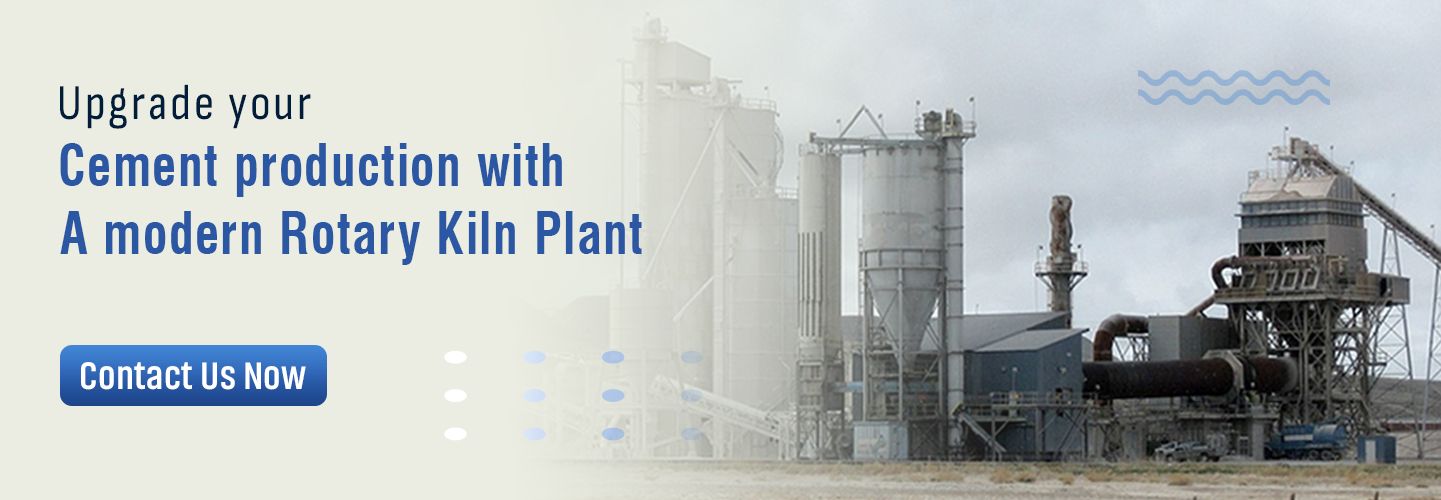
VSK cement plants with rotary kiln cement plants are on the better investment of a cost-effective, energy-efficient production scale. Rotary kilns are used for large-scale production, while VSK machines are usually used for small and medium scale industries. Here’s a detailed explanation for VSK vs rotary kiln.
- Power Consumption: VSK plants are characterized by energy-efficient cement manufacturing, in comparison to rotary kilns, they require significant power.
- Scale of Production: Rotary kilns for the major operation-based technology; while small cement plants use VSK technology more suitable for localized production.
- Installation and Operational Costs: Cost-efficient cement plants based on VSK require lower capital investment and operational costs compared to rotary kilns.
Thus, you can compared VSK vs. Rotary Kiln Cement Plants which will help you make an informed decision.
Role of VSK Cement Plants in Cement Manufacturing
The ball mills systems offered by the VSK cement plants are a key factor for cement manufacturing strength through small and medium-scale production. These localized cement industry plants make sure that the cement to the hitherto-menace market is regular and cheap to transport, thus making it cheaper for the region. They not only produce but contribute to economic growth, create jobs and drive sustainable manufacturing.
Enhancing Cement Production in Small and Medium Enterprises (SMEs)
For this reason, small-scale cement plants are also able to play their role in the whole cement manufacturing industry with the help of VSK cement plants manufacturers. These facilitate localized cement production and minimize reliance on massive, centralized factories.
Bridging the Demand-Supply Gap in Remote Locations
In many geographical terrains, large cement manufacturing plants cannot be set up, making VSK cement plants a vital option. Such plants lead to cost-effective cement plants, serving cement at minimal costs for under-served areas.
Improving Regional Economic Development
By creating employment opportunities, VSK cement plant manufacturers supports economic growth in local communities. Vertical shaft kiln technology promotes the development of related industries, such as logistics and construction.
Supplementing Large-Scale Cement Production
While large plants serve the vast infrastructure projects, the plants established under VSK guarantee supply for small degree projects. VSK technology has the ability to fill the need between mega industrial production and localized demand.
Supporting Sustainable Cement Manufacturing
One of the environmental benefits of VSK include lower fossil fuel consumption, facilitating alternative fuels. As a bonus, raw materials that are sourced locally have a smaller carbon footprint associated with transportation. Specialized energy-efficient cement manufacturing practices reduce overall energy consumption.
Challenges associated with VSK Cement Plants
VSK cement plant solutions have many advantages, but challenges also exist, what are they? These plants do not have the production capability to meet the needs of these facilities at a mass level. In VSK, there is still a challenge to ensure that the quality of clinker produced is uniform, hence the process needs to be improved through technology.
Nevertheless, the vertical shaft kiln technology is continuing to evolve with ongoing research that emphasizes on improving efficiency. Overcoming these challenges are critical for the long-term sustainability of VSK cement plants in the modern age.
- Production Limitations: VSK cement plants have a low output relative to other cement plants such as rotary kiln plants, which diminishes their capacity to meet large-scale requirements.
- Quality Control Issues: VSK can be manufactured in batch process, hence, achieving uniform quality is a challenge.
- Technology Constraints: With improvements, vertical shaft kiln technology can become the cutting edge. It included a series of surveys and sustainability assessments.
- Regulatory and Environmental Compliance: Such stricter environmental standards compel Best Cement Plant Manufacturer to invest in advanced emission control devices.
Types of Cement
The cement types manufactured in VSK cement plants cater to different construction needs. They are hauling quality cement for various purposes which are necessary for the environmental friendly cement market. Here are the types of cement used for construction:
Ordinary (OPC) Portland Cement
Since it is a high strength cement, OPC is also used for general construction. It is well suited to large scale infrastructure projects such as bridges, highways and commercial buildings where structural strength is paramount.
Portland Polymer Cement (PPC)
It consists of pozzolanic material that improve workability and offer improved resistance against chemical attacks. This property makes it suitable for marine structures, hydraulic projects, and environments exposed to sulfate-rich conditions.
Benefits of VSK Cement Plants for the Manufacturing Sector
The VSK cement plants are the most cost effective and efficient way to produce small to medium quantity of cement. They offer a compact design and lower capital investment, making them a cost-effective alternative to large rotary kiln plants. Here are some advantages of VSK Cement Plants in the Manufacturing Industry.
Minimal Investment and Cost-Effectiveness
With much less construction costs than rotary kiln cement plants, VSK cement plants are suitable for small- to medium-scale cement production. Manufacturers also benefit from a short payback time with these systems due to their compact design and lower energy needs.
Environmental and Energy Efficiency Benefits
The manufacturing industry has many benefits, but one of the main benefits of VSK plants is the energy-efficient process of cement manufacturing. Compared to conventional rotary kiln cement plants, they consume less energy and lower carbon emissions, which are more in sync with sustainable dreams. In addition, use of renewable fuels and alternative raw materials are also possible with VSK technology which helps to reduce the environmental effects even further.
Versatility and Adaptability
Tasked with energizing this Ecosystem are the VSK cement plants, which are so adaptable that they can be set up in the most rural of the areas, generating localized cement. They also provide fuel flexibility, enabling manufacturers to switch back and forth between coal, natural gas, and other alternative fuels as needed depending on relative availability and cost. Such plants can also use alternative raw materials, making cement production more sustainable.
Rapid Setup and In-country Manufacturing
VSK Cement Plants have a great advantage in setup time which helps the manufacturers to start with a setup to operations faster than their rotary kiln cement plants. It not only meets the immediate needs of the market, but also supports localized production, lowers transport costs, and provides a constant supply of cement in the local market. Shorter lead times also improve the responsiveness toward top trends for construction industry of the global cement market.
The Future of Cement Manufacturing with VSK Cement Plants
Constantly evolving technology and sustainable production methods make the future of VSK cement plants bright. Vertical shaft kiln technology is catching up in terms of efficiency, emissions and cement quality with new innovations.
With automation and digital solutions taking a lead role, the cement production process is being optimized to result in increased uniformity and cost-efficiency.
The role of VSK plants is further reinforced by government policies to manufacture energy efficient cement and localize production. With infrastructure development on the rise in developing areas, VSK cement plants can significantly contribute to solving cement needs while promoting eco-friendly practice.
Technological Advancements in VSK Cement Production
Researches are done to enhance the functionality of kilns and the quality of cement and called the operations as VSK cement plants. Advancement in the cooling and grinding units can help augment the end-products.
Integration with Advanced Digital and Automated Solutions
Automation in the cement production process improves efficiency and productivity. With real-time monitoring, clinker production and energy consumption can be optimized.
Policies and Support from the Government
Several governments offer incentives for energy-efficient cement production and localized production. Sustainable cement manufacturing policies facilitate the adoption of VSK technology.
Identifying Global Growth Potential
Small scale cement plants can be especially useful in rural and developing regions of the world. VSK plants are an ideal solution to the increasing infrastructure needs.
Conclusion
VSK cement plants have become important in the cement manufacturing industry over the years, since they promote environmental and social sustainability, save cost, and are easily accessible at the regional level.
It is true that although challenges are still ahead, VSK technology improvements and government’s financial incentives will make them play a more central role. The VSK cement plants manufacturers are the pioneers of cement production of the future at the global level embracing renewable resources and involvement in the local economy, while at the same time fulfilling global infrastructure demands.